


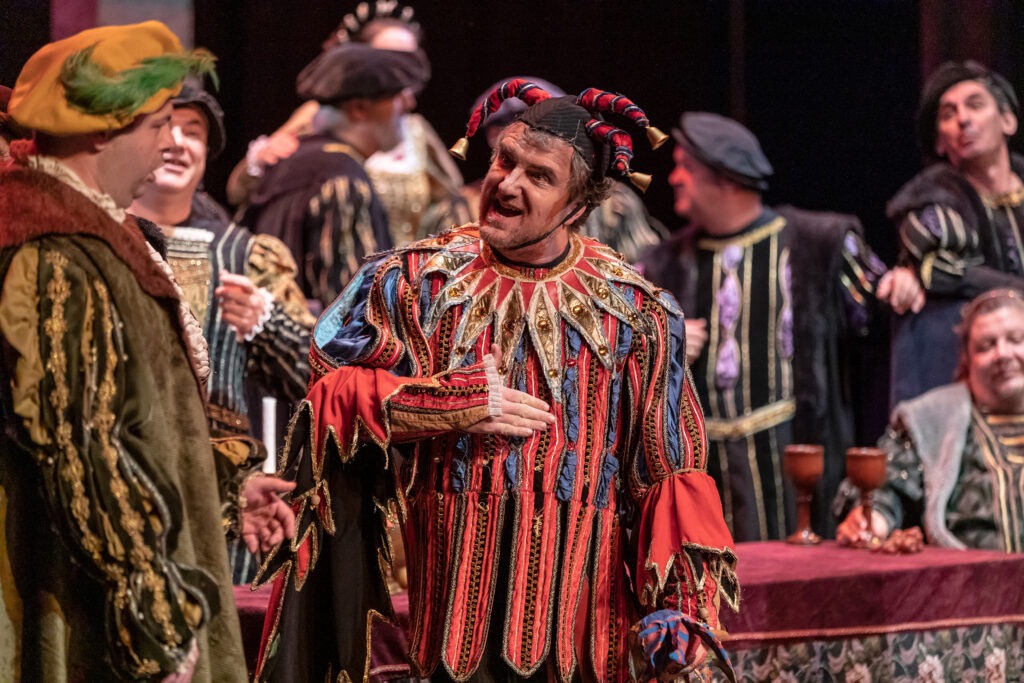
The new season at the Ruse State Opera will open on 18 September at 7.00 pm with one of the timeless masterpieces of the international opera repertoire – Giuseppe Verdi’s "Rigoletto". The new production has been created especially for the Ruse Opera stage, with conductor Dimitar Kosev, director Nina Naydenova, set designer Elitsa Georgieva and costume designer Yana Dvoretska behind it.
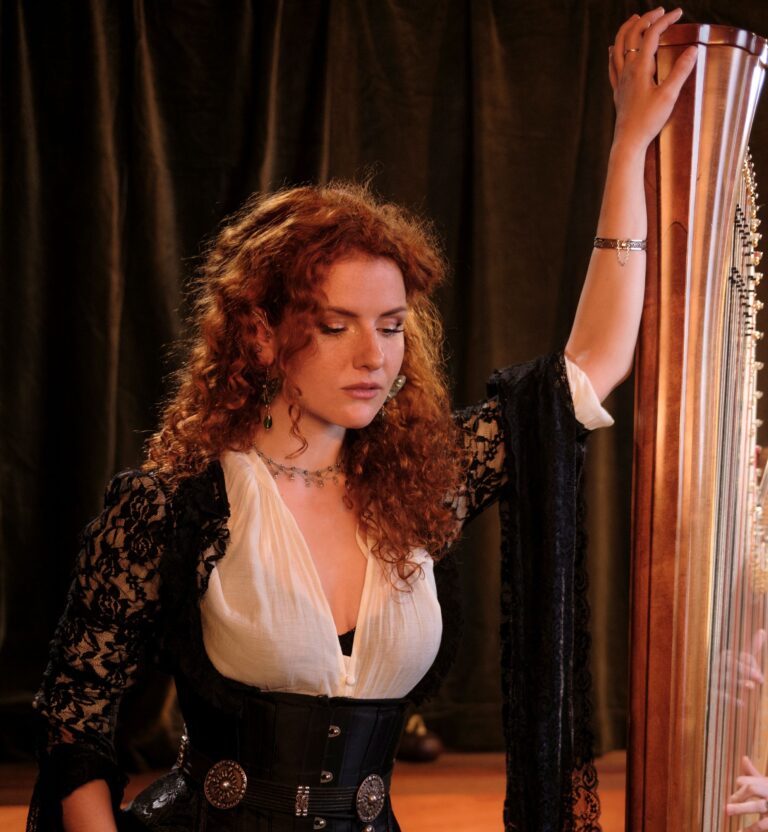
At the heart of the production are Ventseslav Anastasov as Rigoletto and Maria Anastasova as Gilda – father and daughter in real life, appearing together on stage for the first time in such iconic and dramatically intense roles. Their reunion in "Rigoletto" also has a deeper significance – it continues the story of one of the long-standing and much-loved opera families associated with the Ruse Opera Theatre.
Ventseslav Anastasov is a second-generation member of the family of baritone Anastas Anastasov and soprano Maria Ventseslavova – artists who have left a lasting mark on the history of the Ruse Opera. Today, he carries on not only the family tradition, but also an understanding of art built on dedication, integrity and a love of the stage.
‘Rigoletto’ is a story of love, power, deceit, a father’s love and tragedy. But when Rigoletto encounters Gilda, played by his own daughter, this story takes on a deeply personal and emotional dimension. We talk to Ventseslav Anastasov about this, about the legacy passed down through the generations, about great artists, and about the things that cannot be learnt from a textbook.
In "Rigoletto", you play a father, and your own daughter is opposite you on stage. What happens to your personal sense of fatherhood when it has to be transformed into an emotional performance on stage? And does your closeness to Maria help you, or does it sometimes make this encounter even more difficult?
I don’t know what’s going to happen. This is the first time we’ve appeared together on stage in such serious roles. I think the combination of being ‘father and daughter’ in real life and ‘father and daughter’ on stage is a serious threat to my emotional stability. Over the years, I’ve developed a fairly steady demeanour and mental fortitude on stage, for which I’m known amongst my colleagues. Now the moment has come when I can say to myself: ‘Right then, let’s see what you’ve got!!’
But never mind – these difficulties of mine, on the other hand, will be of interest to the audience, so it’s worth it. The other major difficulty with this duet of ours, let’s call it that, is that I am also Maria’s main singing teacher. I hope I can put that aside and focus on my own singing, rather than analysing hers all the time. But, as the saying goes: ‘One can always hope, but it’s unlikely.’
You are the second generation of a family that has left a lasting mark on the Ruse Opera – Anastas Anastasov and Maria Venceslavova were long-standing soloists at the theatre. What aspects of their presence, their attitude to the profession and to the stage do you still carry with you, even today?
Maria and Anastas were great artists and singers. They lived as if in a far more idealistic era. Back then, art itself was of the utmost importance. How did everything unfold, what were the relationships between the characters, what were the dramatic tensions and directions? All of this truly moved them. They were deeply dedicated and practised their art with genuine passion. I have been present at discussions about the characters and the story of a particular opera – discussions that were imbued with a Renaissance-like enthusiasm. The main thing that stood out in this whole opera-centred life was a love of art, and I think that is the most important factor in an artist’s worth.
You sang "Tosca" with José Cura just the other day. What does a singer take away from sharing the stage with an artist of his calibre? Is there anything one learns not from words, but simply from being in the presence of such an artist?
Over the years, I have shared the stage with great artists such as José Cura, Maria Gulegina, Alexandrina Milcheva, Andrea Bocelli, Plácido Domingo… What has struck me about these people is the sheer magnitude of the aura surrounding them whilst they are on stage. I believe that an artist’s energy is visible. I remember Plácido Domingo, who literally seemed to grow larger on stage and fill the space around him with his energy.
‘Rigoletto’ is a story about a father’s love, which seeks to protect, but sometimes it is precisely this love that proves powerless in the face of life. How has your interpretation of Rigoletto changed over the years – especially now that you yourself are the father of a daughter who is already pursuing her own artistic path?
I try to pass on my experience and knowledge, both on stage and in life. I try to do this through actions rather than words. In other words, by setting a personal example. I’m very careful about boundaries, because everyone has their own path and their own destiny, and it’s not right to interfere too much.
When three generations of the same artistic family have performed on the same stage, what do you think is passed down from one generation to the next – the voice, the profession, a love of the theatre, or something much harder to put into words? And where, in your view, does the legacy end and the artist’s personal journey begin?
Heredity is a contributing factor. It is very important, but ultimately our destiny lies in our own hands, to put it in the spirit of *Rigoletto*. Otherwise, we would see a much greater degree of repetition across the generations. My daughter Maria proved this by branching out and achieving success in genres other than opera. What is undoubtedly passed on genetically is the voice and musicality, but as an idea and a legacy, I think it is this: to be as honest as possible in art and to have a love for it.